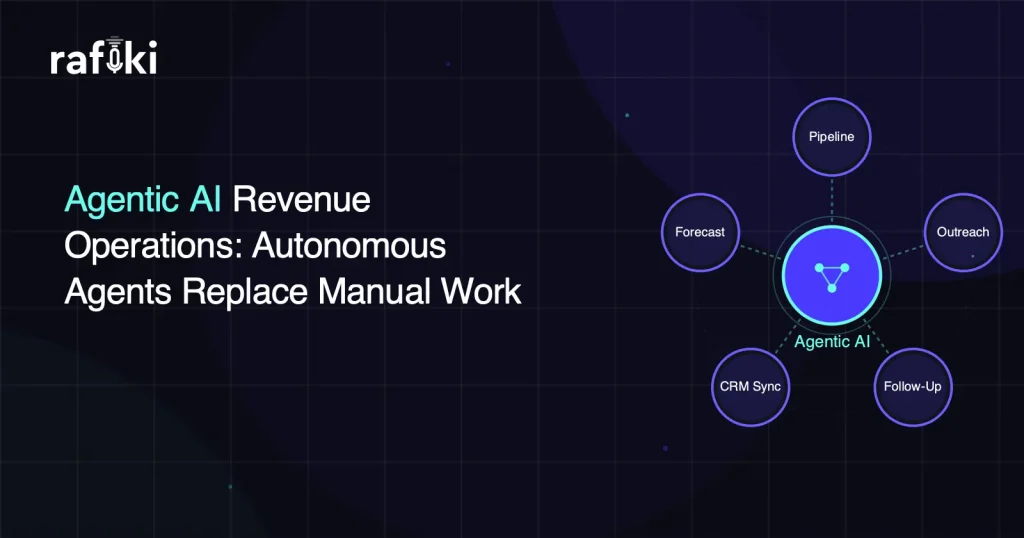
Your revenue operations team is drowning in manual pipeline workflows while winnable deals slip through cracks that autonomous AI could have sealed shut.
Every day, RevOps professionals spend countless hours on repetitive tasks: updating deal stages, chasing reps for forecast updates, manually scoring opportunities, and creating reports that are outdated before they're delivered. Meanwhile, the signals that predict deal outcomes—buried in sales conversations, email threads, and CRM notes—remain invisible to human analysis at scale.
The traditional approach to revenue operations treats AI as an add-on feature, not the foundation. Teams cobble together point solutions, rely on manual data entry, and wonder why their pipeline predictions miss the mark quarter after quarter. In 2026, this reactive model isn't just inefficient—it's a competitive death sentence.
Revenue operations has become the nervous system of modern sales organizations, but most teams still operate like it's 2015. The fundamental problem isn't lack of data—it's the manual effort required to transform raw sales activity into actionable intelligence.
Traditional revenue operations workflows create systematic blind spots that compound over time:
The consequences ripple through the entire revenue engine. Marketing can't optimize spend without accurate attribution. Sales leadership makes territory decisions based on incomplete data. Customer success inherits accounts without context about the sales process that closed them. This fragmentation doesn't just impact efficiency—it actively destroys revenue potential.
Agentic AI revenue operations represents a fundamental shift from reactive data analysis to proactive revenue orchestration. Unlike traditional AI tools that require human prompting, agentic AI systems operate autonomously within defined parameters, continuously monitoring, analyzing, and acting on revenue signals without manual intervention.
The core distinction lies in agency itself—the ability to initiate actions rather than simply respond to queries:
This autonomous approach transforms revenue operations from a cost center that reports on what happened to a profit center that influences what happens next. The AI doesn't just analyze your pipeline—it actively improves it.
Effective agentic AI revenue operations requires a systematic approach across six core domains. Each pillar represents an area where autonomous agents can replace manual workflows while delivering superior outcomes.
Traditional conversation analysis requires human reviewers to manually identify key moments in sales calls. Agentic AI systems analyze every conversation in real-time, extracting deal-relevant insights automatically:
The compound effect of analyzing every conversation means patterns emerge that no human reviewer could identify across hundreds of deals simultaneously.
Manual deal reviews rely on subjective rep assessments and periodic check-ins. Autonomous agents continuously monitor deal health using objective conversation signals, email engagement patterns, and buying committee behavior:
This continuous monitoring enables proactive intervention rather than reactive damage control.
Traditional pipeline management operates in batch mode—weekly forecast calls, monthly QBRs, quarterly territory reviews. Agentic AI revenue operations functions in continuous mode, adjusting strategies as new information becomes available.
The orchestration happens across multiple dimensions simultaneously:
This real-time orchestration means your pipeline optimizes itself rather than waiting for human intervention during weekly pipeline reviews.
Sales coaching traditionally requires managers to manually review call recordings and provide feedback during one-on-one meetings. Agentic AI systems analyze every rep interaction and deliver personalized coaching recommendations immediately after each call.
The coaching becomes both more specific and more scalable:
Rather than generic training modules, each rep receives coaching tailored to their actual performance patterns and improvement opportunities.
The shift to agentic AI revenue operations requires a platform built specifically for autonomous operation, not traditional tools with AI features bolted on. Rafiki's six autonomous AI agents work together as a complete revenue intelligence system that operates 24/7 without human intervention.
The AI-native architecture means each agent specializes in specific revenue operations functions while sharing insights across the platform:
Unlike legacy platforms that require extensive configuration and ongoing maintenance, Rafiki's RevOps solution deploys in minutes and begins generating insights immediately. The agents learn your specific deal patterns, buyer behaviors, and sales process nuances without manual training.
The platform supports over 60 languages and integrates natively with Salesforce, HubSpot, Zoho, Pipedrive, and Freshworks—enabling global teams to implement agentic AI revenue operations without technical barriers.
Transitioning to agentic AI revenue operations requires a phased approach that builds confidence while delivering immediate value. The most successful implementations follow a systematic rollout that proves ROI before expanding scope.
The implementation follows four distinct phases:
Each phase builds on the previous one while delivering measurable improvements in forecast accuracy, deal velocity, and rep productivity. The key is maintaining focus on business outcomes rather than technical features during the rollout.
Traditional revenue operations measurement focuses on activity-based metrics—calls made, emails sent, demos delivered. Agentic AI revenue operations enables outcome-based measurement that directly correlates with revenue performance.
The new measurement framework tracks leading indicators of revenue health:
These metrics provide direct line-of-sight between AI implementation and revenue outcomes, making it easier to justify continued investment and expansion.
The companies that dominate their markets in 2026 won't be those with the best products—they'll be those with the most intelligent revenue operations. Agentic AI creates sustainable competitive advantages that compound over time.
While competitors struggle with manual processes and reactive analysis, organizations with autonomous revenue intelligence gain several strategic advantages:
The gap between AI-native revenue operations and traditional approaches will only widen as autonomous systems become more sophisticated and data advantages compound.
Agentic AI revenue operations represents more than technological evolution—it's a fundamental reimagining of how revenue teams operate. The shift from manual workflows to autonomous intelligence isn't just about efficiency gains; it's about creating revenue engines that improve themselves.
Organizations that embrace this transition now will establish data advantages and operational capabilities that become increasingly difficult for competitors to match. The question isn't whether agentic AI will transform revenue operations—it's whether your team will lead the transformation or be forced to catch up.
The technology exists today. The integration challenges have been solved. The only remaining barrier is organizational willingness to abandon manual processes in favor of autonomous intelligence.
Ready to transform your revenue operations with agentic AI? Rafiki's AI-native platform starts at just $19 per seat with no minimums and no annual commitment. Start your free trial today or book a demo to see how six autonomous AI agents can replace your manual pipeline workflows and unlock revenue potential you didn't know existed.
Start for free — no credit card, no seat minimums, no long contracts. Just better sales intelligence.