Account mapping meaning, in its simplest form: the process of visually identifying and organizing every key stakeholder, their role, and their relationships within a target account so your sales team knows exactly who to engage and how. It goes far beyond a standard org chart — account mapping captures informal influence, decision-making authority, and internal politics that ultimately determine whether a deal closes or stalls.
In complex B2B sales, the average enterprise deal now involves six to ten decision-makers, according to Gartner. Without a clear map of who those people are and how they relate to each other, reps waste cycles pitching the wrong stakeholders while real decision-makers remain untouched. Account mapping eliminates that guesswork and gives your team a strategic blueprint for every high-value opportunity.
Let's break down exactly what account mapping involves, why it matters, and how to do it right.
Account mapping is the practice of creating a visual representation of the critical individuals — and their interconnectedness — within a target company. Think of it as a battlefield strategy map for B2B sales: it shows you where to deploy resources, which paths lead to the decision-maker, and where resistance might surface.
Unlike a traditional organizational chart that simply shows reporting lines, an account map captures:
By uncovering these dynamics, you gain a strategic advantage. You can present technical details to influencers, highlight ROI to decision-makers, and showcase user experience for end-users — all within a coordinated, multi-threaded sales motion.
Remember the scenes in mythological or fantasy films where the commander studies a giant map of the battlefield and brainstorms strategies? Account mapping gives sales leaders that same vantage point for converting an account. Imagine having a map like that to know exactly where to deploy your troops and resources to find the best path to victory:
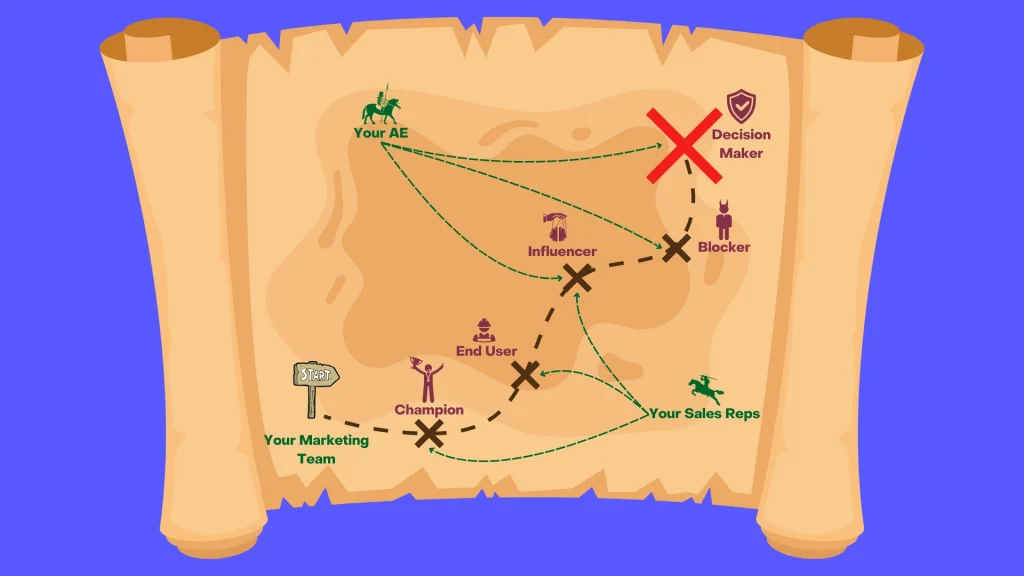
Complex B2B deals rarely hinge on a single conversation with a single person. According to Forrester research, B2B buying groups continue to expand, and sellers who fail to multi-thread across these groups see significantly lower win rates. Account mapping directly addresses this challenge by giving reps a structured way to:
Rafiki AI's conversation intelligence platform helps teams detect these stakeholder signals automatically. When a prospect mentions "I'll need to loop in our VP of Operations," Rafiki AI surfaces that insight so reps can update their account map in real time — no manual note-taking required.
Who should you include on your account map? While the specifics will vary depending on the industry and company size, here are the key players you won't want to miss:
By pinpointing these key roles and understanding their relationships, you can craft a multi-pronged approach. You can present technical details to the influencers, highlight ROI to the decision-makers, and showcase user experience for the end-users. Rafiki AI's Smart CRM Sync is a powerful tool here — it automatically populates your CRM fields with key information from calls, like whether someone has the authority to sign a deal, helping you build a more accurate picture of the account structure.
An effective account map should be a clear and concise visual representation of the target organization. Here are the key elements to include:
Now that we know what to include and the right positions to map, it'll be easier to understand the key benefits of account mapping:
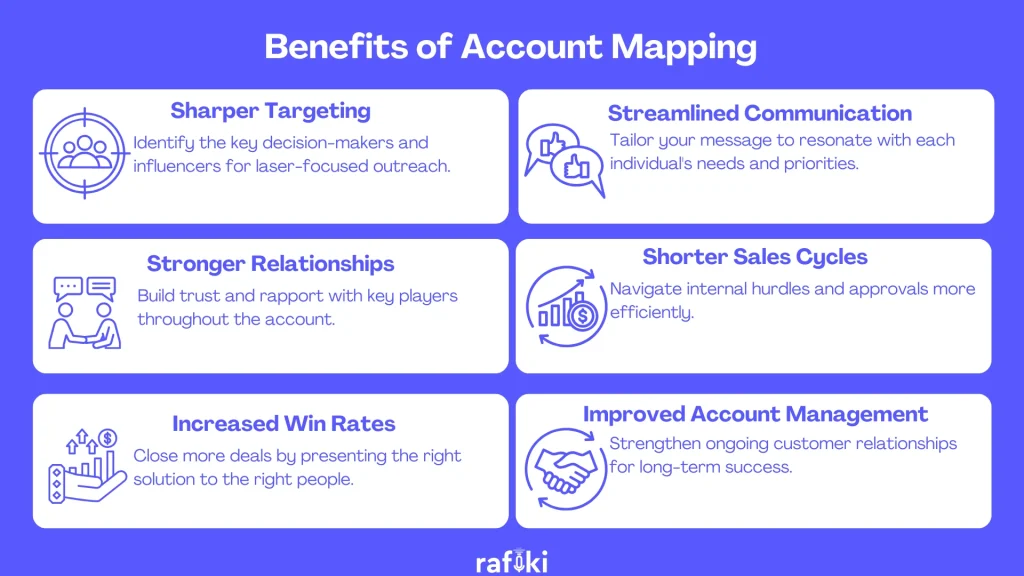
Now that you understand the importance of account mapping and the key players to identify, let's dive into the practical steps of creating your own map. Here's a breakdown of the process:
1. Gather Information: Compile data from various sources to build a comprehensive picture of the target account. This might include:
2. Identify Key Players and Roles: Once you have a good grasp of the organization, analyze the information to pinpoint the key decision-makers, influencers, champions, blockers, and end-users.
3. Choose a Mapping Tool: Select a tool to visualize your account map. Popular options include whiteboards, online collaboration platforms, or dedicated account mapping software. Some teams embed maps directly in their CRM for easy access.
4. Visualize the Account Structure and Relationships: Here's where your chosen tool comes into play. Use it to create a clear and easy-to-understand representation of the organization's structure. Depict departments and reporting lines, and then connect individuals with lines to indicate their relationships (e.g., champion → influencer → decision-maker).
5. Continuously Update the Account Map: Account maps are living documents. Personnel changes, re-orgs, and new project developments can reshape the buying committee overnight. Regularly update your maps with new information to maintain their accuracy and effectiveness. Conversation intelligence tools like Rafiki AI make this easier by automatically flagging when new stakeholders appear in calls or when existing contacts change roles.
The ownership of account mapping can vary depending on your company structure. Ideally, it should be a collaborative effort between sales and marketing teams, with contributions from those who have existing relationships within the target account. Customer success teams should also contribute — especially for expansion and renewal motions where existing usage data reveals new stakeholders.
The best time to create an account map is early on in the sales cycle, ideally during the qualification stage. This allows you to tailor your outreach strategy from the very beginning and avoid wasting time on irrelevant contacts. Account mapping can also be revisited and refined throughout the sales process as you gather more intel.
So far, we've discussed the right way to do account mapping. But you should keep in mind that even with the best execution, you will still face some challenges. It's important to plan for these challenges early on.
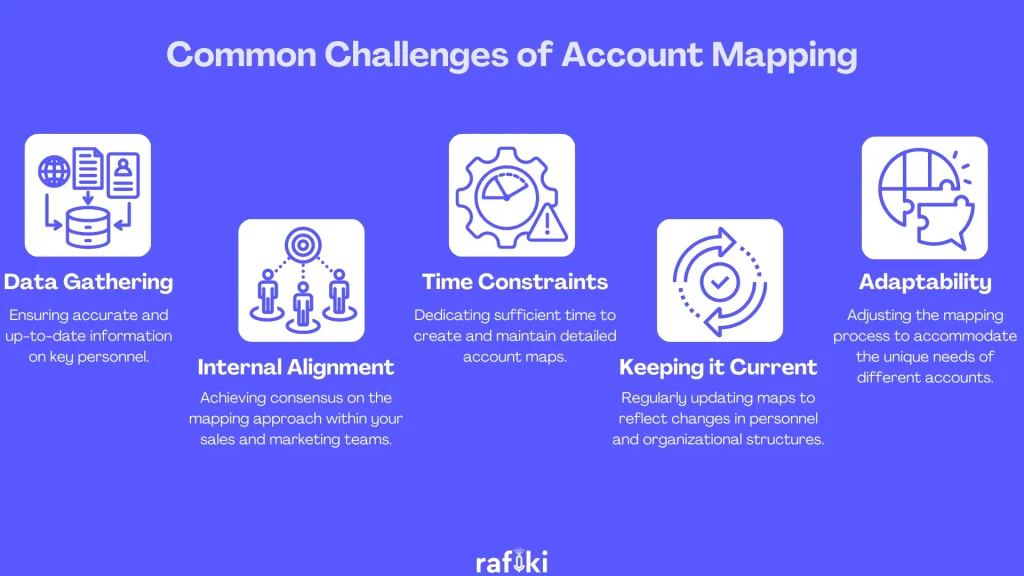
Even experienced sales teams stumble with account mapping. Watch out for these pitfalls:
Incorporating account mapping into your sales strategy gives you a structural edge in today's complex B2B landscape. With a clear understanding of the key players, their influence, and their relationships, you can craft targeted messaging that resonates with the right people at the right time — and avoid the costly mistake of flying blind into multi-stakeholder deals.
The account mapping meaning is straightforward, but the impact is profound: better pipeline visibility, higher win rates, and shorter sales cycles.
Rafiki AI's conversation intelligence platform starts at $19 per seat per month with no minimums and no annual commitment. Start your free trial today or book a demo to see how AI-powered call insights can supercharge your account mapping and accelerate your revenue growth.

Map Your Sales Success
Start for free — no credit card, no seat minimums, no long contracts. Just better sales intelligence.