Feature benefit selling is a sales technique where reps connect a product's features to the specific outcomes those features create for the buyer. Instead of listing what a product does, the seller explains what it means for the customer — less wasted time, lower costs, faster growth, or greater peace of mind.
It sounds simple, yet most sales conversations still lead with specs and jargon. According to Salesforce's State of Sales report, 87% of business buyers expect reps to act as trusted advisors — not product narrators. Feature benefit selling is the framework that makes that shift possible. When you translate every capability into a tangible customer win, "maybes" turn into "yeses" faster and more consistently.
Let's break down exactly how to do it — with definitions, steps, best practices, and real-world examples you can use today.
Have you ever walked into a car dealership and been bombarded with technical jargon about horsepower, fuel efficiency, and torque? While these are all features of a car, they might not resonate with someone simply looking for a reliable vehicle for their daily commute. That's the key difference between features and benefits:
Feature benefit selling bridges this gap between functionalities and value. It's about taking those features and transforming them into compelling reasons why a customer should choose your product. Instead of just saying your car has a high horsepower rating, you might highlight how that translates to a smooth, confident ride on the highway — perfect for those long weekend trips.
Think of it this way: features are all about the "what," while benefits focus on the "so what." Customers aren't buying features; they're buying the positive outcomes those features deliver. By speaking to your customer's needs and aspirations, you craft a message that resonates and compels them to take action.
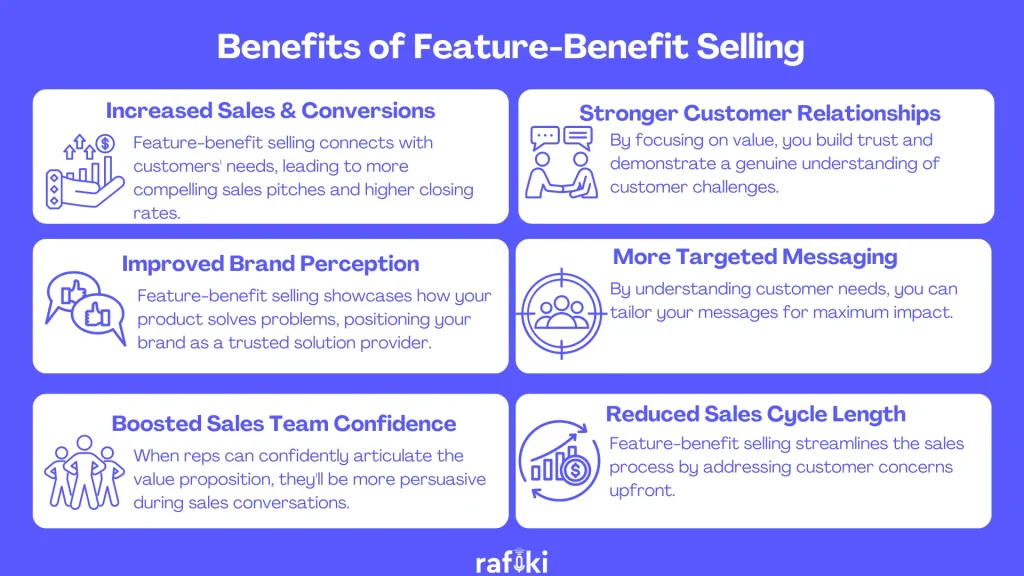
Now, let's summarize why you should invest the time and effort required to implement feature benefit selling:
One of the most common stumbling blocks in benefit selling is confusing features, benefits, and value. Here's a quick breakdown:
Value is often misunderstood, but you can think of it as a higher-level benefit — something that speaks to the core of who the prospect is or what they ultimately want to achieve. The strongest sales pitches chain all three together: feature → benefit → value.
A Harvard Business Review analysis found that top-performing reps consistently frame conversations around buyer outcomes rather than product capabilities. Feature benefit selling gives you a repeatable way to do that every time.
So, you're convinced feature benefit selling is the key to unlocking more sales conversations and closing deals. But how do you actually put it into practice? Here's a roadmap to get you started:
This might seem like a no-brainer, but a deep understanding of your product's features is crucial. Take some time to make a list of everything your product or service can do. Don't just stop at the technical specifications; consider the broader functionalities and how they might benefit different customer segments.
Tools like Rafiki AI's conversation intelligence can help here — by analyzing hundreds of real sales calls, you can discover which features prospects actually ask about most, rather than guessing.
Now it's time to shift your focus to the customer. What are their biggest challenges? What keeps them up at night? Conduct market research, analyze customer feedback, and engage in one-on-one conversations to understand their pain points and goals.
Here's where the magic happens! Match each feature on your list to the specific benefits it offers that address your customer's needs. For example, if your product boasts a "user-friendly interface" (feature), the benefit might be "increased efficiency and reduced training time for your team" (benefit).
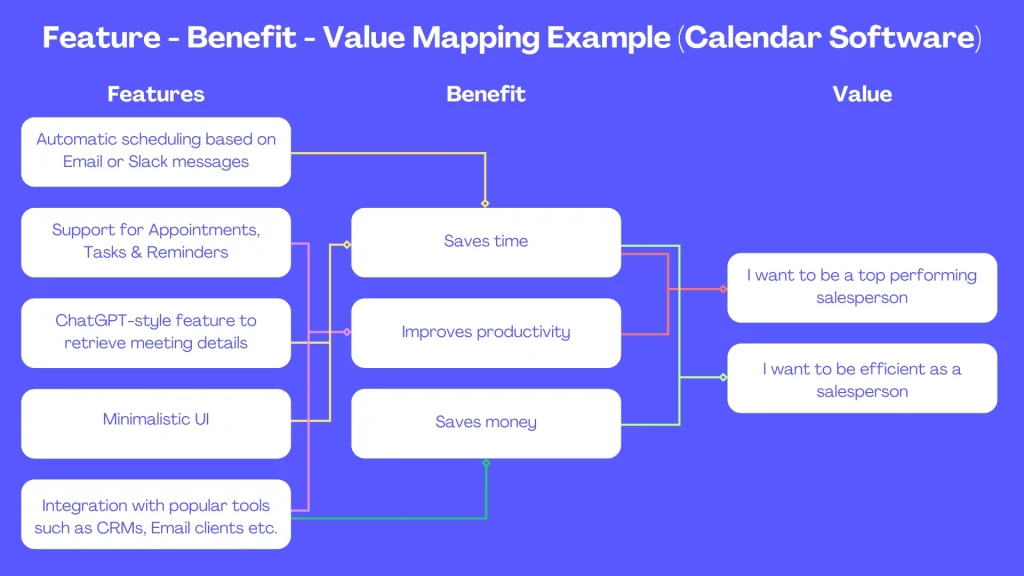
This is a highly beneficial exercise that should be done by every salesperson from time to time, regardless of whether you're formally implementing feature benefit selling. Map the three pillars of your proposition — features, benefits, and value.
Here is an example of feature-benefit-value mapping for a calendar software:
Don't just say your product is "fast" or "reliable." Craft benefit statements that paint a vivid picture of the positive impact it will have on the customer's life. Use strong action verbs and quantify the benefits whenever possible. For instance, instead of saying your software is "easy to use," you could say, "Rafiki AI's intuitive interface can help your sales reps get up to speed 50% faster, allowing them to close more deals sooner."
The more comfortable you are articulating the benefits of your product, the more convincing you'll be to potential customers. Rehearse your pitch out loud, role-play with colleagues, and review recordings of real calls to identify areas for improvement. Conversation intelligence platforms let you see exactly which benefit statements land — and which fall flat — so you can iterate based on evidence, not intuition.
Mastering feature benefit selling is more than just a fancy sales technique; it's a strategic approach that transforms product descriptions into compelling reasons to buy. Here are ten specific tips to elevate your benefit selling and close more deals:
Features are technical, but benefits tap into emotions. Highlight how your product will make customers feel — secure, empowered, or in control. For instance, selling a home security system isn't just about the number of sensors (feature). It's about giving homeowners peace of mind and a sense of security for their families (benefit).
Facts tell, but stories sell. Weave anecdotes into your pitch that showcase real-world examples of how your product has benefited similar customers. Sharing a story about a client who increased sales by 20% after using your CRM platform (benefit) is far more impactful than simply listing its features.
Don't just explain what your product does; explain why it matters. When presenting a feature like "24/7 customer support," go beyond its face value. Explain why it's important (benefit) — perhaps to ensure customer satisfaction and minimize frustration, giving customers peace of mind knowing help is always available.
Avoid technical jargon and industry buzzwords. Use language your target audience understands and tailor your message to resonate with their specific needs. For example, if you're selling accounting software to small businesses, focus on benefits like "saving time on bookkeeping" rather than boasting about complex accounting algorithms (features). Rafiki AI's deal intelligence can surface the exact language buyers use on calls, so you can mirror it in every conversation.
Numbers add credibility. Whenever possible, quantify the benefits of your product with data or metrics. For instance, instead of saying your marketing software "improves campaign performance," highlight how it "increased click-through rates by 30%" (benefit).
The more specific you are about the customer's challenges, the more impactful your solution will seem. Conduct thorough customer research to understand their unique pain points and tailor your benefit statements to address them directly.
Be prepared for potential objections customers might raise. Think through these concerns beforehand and craft benefit statements that preemptively address them. If a customer hesitates about the cost of your product (a potential objection), highlight the long-term benefits — increased efficiency, cost savings — that outweigh the initial investment.
Welcome questions during your sales pitch. This demonstrates your confidence in the product's value and allows you to tailor your benefit statements to the customer's specific needs as the conversation unfolds. The best sellers treat objections and questions as buying signals, not roadblocks.
Testimonials, case studies, and customer success stories are powerful tools for social proof. Showcase how others have benefited from your product, adding credibility to your claims and demonstrating the value proposition in action.
The more comfortable you are articulating the benefits of your product, the more convincing you'll be. Rehearse your pitch out loud, role-play with colleagues, and use tools like Rafiki AI to analyze your sales calls and identify areas for improvement. By honing your delivery and tailoring your benefits to resonate with each customer, you'll be well on your way to closing more deals.
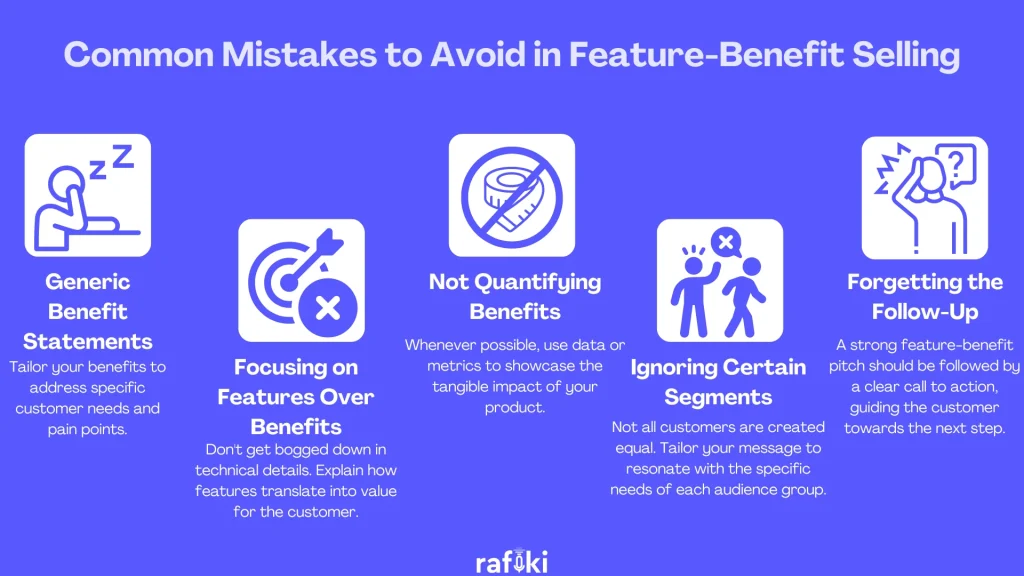
No best practices guide is complete without discussing the pitfalls. Here are the most common mistakes that undermine feature benefit selling — and how to avoid them:
Let's see how feature benefit selling translates into action across different customer segments:
Mastering feature benefit selling is a game-changer for any sales team. By focusing on the "so what" instead of just the "what," you craft compelling messages that resonate with your customers and drive revenue. It's all about understanding buyer needs and demonstrating how your product or service helps them achieve their goals — in language that feels relevant, specific, and human.
The framework is straightforward: know your product, know your customer, and connect the dots between features and outcomes. The reps who do this consistently outperform those who rely on spec sheets and hope.
Ready to put feature benefit selling into action and see the results for yourself? Rafiki AI's conversation intelligence platform starts at $19 per seat per month with no minimums and no annual commitment. Start your free trial today or book a demo to see how AI-powered call analysis helps your reps deliver winning benefit-led pitches, every time.

Master Feature-Benefit Selling
Start for free — no credit card, no seat minimums, no long contracts. Just better sales intelligence.