Customer Success

Cross-Selling Definition, Techniques & How It Boosts Revenue
May 9, 2024
7 min read
Cross-selling is the practice of recommending complementary products or services to a customer who is already making — or has already made — a purchase. Unlike upselling, which encourages a higher-tier version of the same product, cross-selling introduces items from a different category that enhance the original purchase. Done well, it increases average deal size, deepens customer relationships, and creates a more complete solution for the buyer.
The pressure to hit sales targets is a constant reality for revenue teams. Cross-selling is one of the most effective ways to grow revenue from your existing customer base — without the cost of acquiring net-new logos. According to McKinsey, companies that excel at cross-selling and personalization can increase revenue by 10–30%. Yet many sales teams leave this opportunity on the table because they confuse cross-selling with upselling or lack a repeatable process.
Below, we break down the cross-selling definition in depth, compare it to upselling, share five proven techniques, and show how conversation intelligence makes every recommendation smarter.
Cross-selling means offering a customer an additional product or service that complements what they're already buying. The goal isn't to replace the original purchase — it's to make it more valuable. Think of it as completing the picture rather than upgrading the frame.
Two qualities separate genuine cross-selling from random product pushing:
Imagine a company selling email marketing software. The salesperson, seeing the prospect's need to fill a healthy pipeline, might also recommend a lead verification tool. These two products integrate well, and the customer gains the ability to not only send emails but also find more qualified leads to reach. The whole becomes greater than the sum of its parts — a genuine win-win.
Platforms like Rafiki AI's conversation intelligence help reps identify these moments by surfacing pain points and expansion signals buried in sales calls, so reps know exactly when a complementary product would resonate.
Consider a customer purchasing a new printer. An effective cross-sell strategy would involve suggesting compatible ink cartridges or a paper refill package. These additional products directly complement the printer purchase, ensuring the customer has everything they need for a smooth printing experience. Cross-selling done right provides a win-win situation: the customer gets a more complete solution, and your business benefits from increased sales.
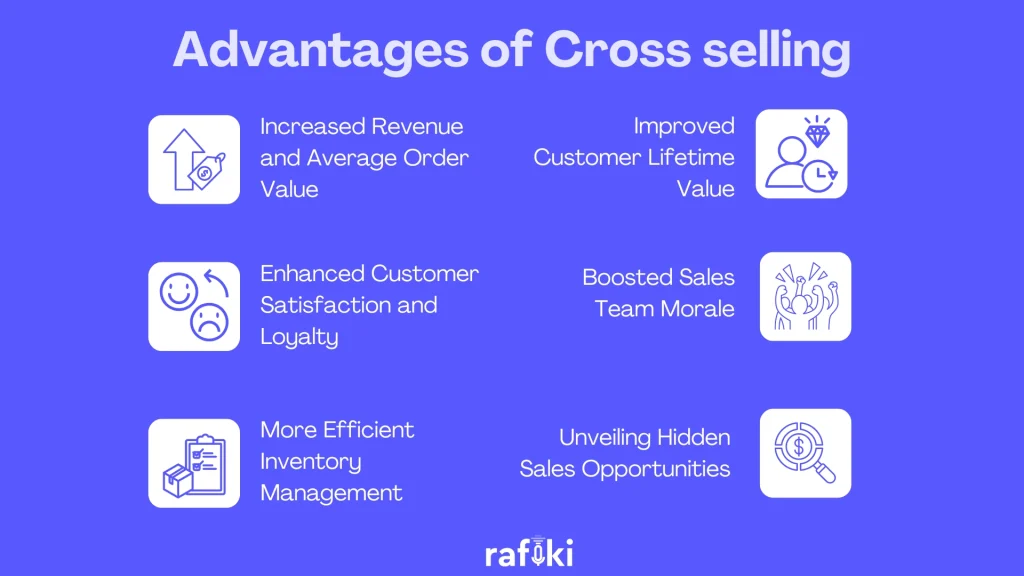
Why invest in a cross-selling strategy? The benefits go far beyond a single transaction:
While both cross-selling and upselling aim to increase sales, they target customers in distinct ways. Here's a breakdown to help you differentiate between the two:
Quick-reference comparison:
The best revenue teams use both strategies in tandem. Upselling deepens product adoption within a category; cross-selling expands the relationship across categories. Together, they maximize account value.
So, you're convinced of the power of cross-selling and ready to take your sales game to the next level. But where do you begin? Here are five battle-tested techniques to equip you for cross-selling success:
The foundation of a successful cross-sell lies in truly understanding your customer's needs. Instead of launching into a product pitch, ask insightful questions to uncover their goals, challenges, and pain points. Think of yourself as a detective, piecing together clues to identify the perfect complementary product that solves a hidden problem or enhances their initial purchase.
Conversation intelligence tools like Rafiki AI's coaching intelligence automatically flag topics and objections that arise across calls, giving managers and reps a data-backed view of which customer needs are going unaddressed — and where cross-sell opportunities hide.
Avoid technical jargon and focus on translating product benefits into solutions for the customer's specific situation. Imagine explaining a new printer to your grandma; ditch the acronyms and highlight the ease of use, reliable printing quality, and affordability. Tailoring your cross-sell message to resonate with the customer's needs demonstrates that you care about their experience, not just making a sale.
Nobody likes a salesperson who sounds like a used-car salesman. After you've unearthed the customer's needs through discovery and presented your cross-sell option in clear, customer-centric language, give them space to consider. Offer additional information or answer questions, but avoid being overly persuasive. A genuine recommendation positions you as a trusted advisor, not a pushy salesperson.
Customers are often drawn to the convenience and perceived value of bundled products. Create enticing packages that combine your core offering with complementary items at a discounted price. This not only simplifies the buying process for the customer but also encourages them to explore additional products they might not have considered otherwise. Think smartphone bundles that include headphones and a case, or software subscriptions packaged with training and onboarding support.
Data is everywhere. Leverage customer purchase history and buying trends to inform your cross-selling efforts. A revenue intelligence platform like Rafiki AI analyzes past interactions and surfaces hidden cross-selling opportunities that reps might otherwise miss. This data-driven approach ensures your cross-sell suggestions are personalized and highly likely to resonate with the customer's specific needs — turning every conversation into a growth opportunity.
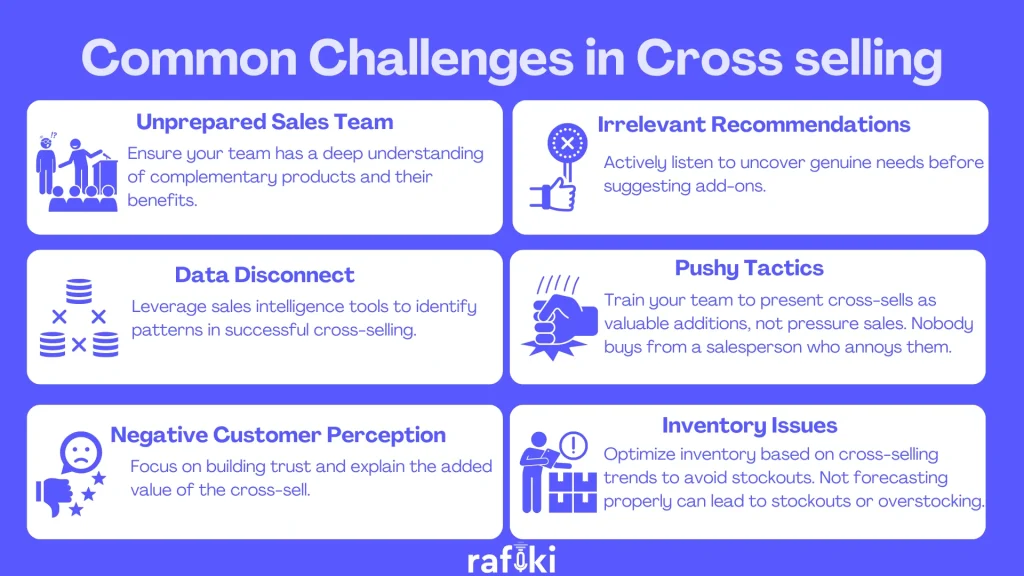
Even experienced sales teams encounter hurdles when rolling out a cross-sell strategy. Recognizing these pitfalls early makes them far easier to navigate:
Cross-selling done right is a win-win for both businesses and customers. However, it's crucial to maintain ethical practices to ensure long-term trust and customer satisfaction. Here's the key:
Cross-selling is a powerful approach for boosting revenue and customer satisfaction when implemented strategically. By understanding customer needs, recommending relevant products, and prioritizing value over pressure, you can transform cross-selling from a one-off sales tactic into a repeatable growth engine.
The difference between average and exceptional cross-selling often comes down to intelligence — knowing what the customer actually said, what they need, and when they're ready to hear about it. That's where conversation and revenue intelligence bridges the gap.
Rafiki AI's conversation intelligence platform empowers your sales team with the insights they need to personalize every cross-sell recommendation and maximize impact. Pricing starts at $19 per seat per month with no minimums and no annual commitment. Start your free trial today or book a demo to see how AI transforms your revenue operations.

Cross Sell Effectively
Start for free — no credit card, no seat minimums, no long contracts. Just better sales intelligence.