Call mapping is the strategic process of planning and structuring a sales conversation before it happens — outlining key topics, questions, objection responses, and next steps so every call moves toward a defined outcome. Think of it as a flexible roadmap: detailed enough to keep you on course, but open enough to let you adapt in real time.
Without a call map, reps default to improvisation. According to Salesforce's State of Sales report, high-performing sales teams are 1.9× more likely to use structured conversation frameworks than underperformers. Call mapping is one of the simplest ways to join that group — whether you're running cold outbound, discovery calls, or closing conversations. Below you'll find a complete framework, common mistakes to dodge, and practical tools to make every call count.
Call mapping is the strategic planning of your entire sales conversation. Just as a trip requires planning destinations, transportation, and potential detours, your call map outlines the flow of your conversation. It includes key topics you want to cover, questions to ask your prospect, and potential responses to address their concerns. This structured approach ensures you don't miss crucial information or get sidetracked during the call, keeping the conversation focused and moving towards your defined objective.
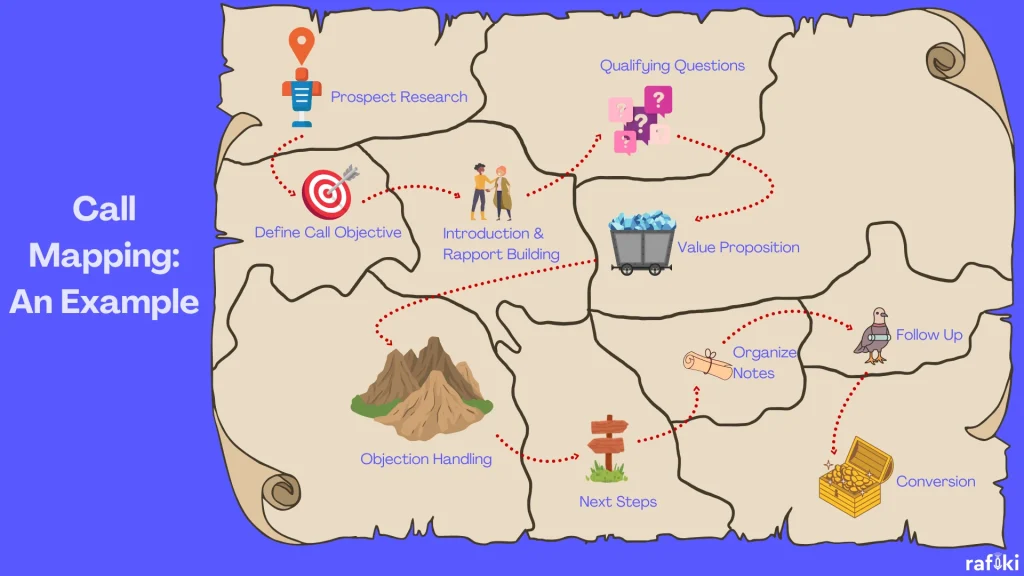
But don't confuse this with a "mapping call" — that refers to calls that help a salesperson or customer success manager map out a prospect's organization. Here's a visual illustration of what call mapping may look like for a typical discovery call:
Call mapping and sales scripts serve different purposes in a salesperson's toolkit. While both aim to guide the sales conversation, they differ significantly in flexibility and focus.
A call map is a roadmap for your call, outlining key topics, questions, and potential responses. It's flexible, allowing for adaptation based on the prospect's needs — a strategic plan with room for improvisation. A sales script, in contrast, is a word-for-word outline of what to say. It offers consistency but can sound robotic and hinder genuine connection. Scripts tend to focus on features, while call maps emphasize addressing the prospect's specific challenges and the benefits that matter most to them.
To put it simply: call mapping empowers thoughtful conversation, while sales scripts prioritize a controlled presentation.
Unstructured sales calls leak revenue. Reps forget discovery questions, skip objection handling, and end calls without clear next steps. Call mapping solves these problems by giving every conversation a backbone.
According to Gartner, 75% of B2B sales organizations will augment traditional playbooks with AI-guided selling by 2026. Call mapping is the foundation those playbooks are built on.
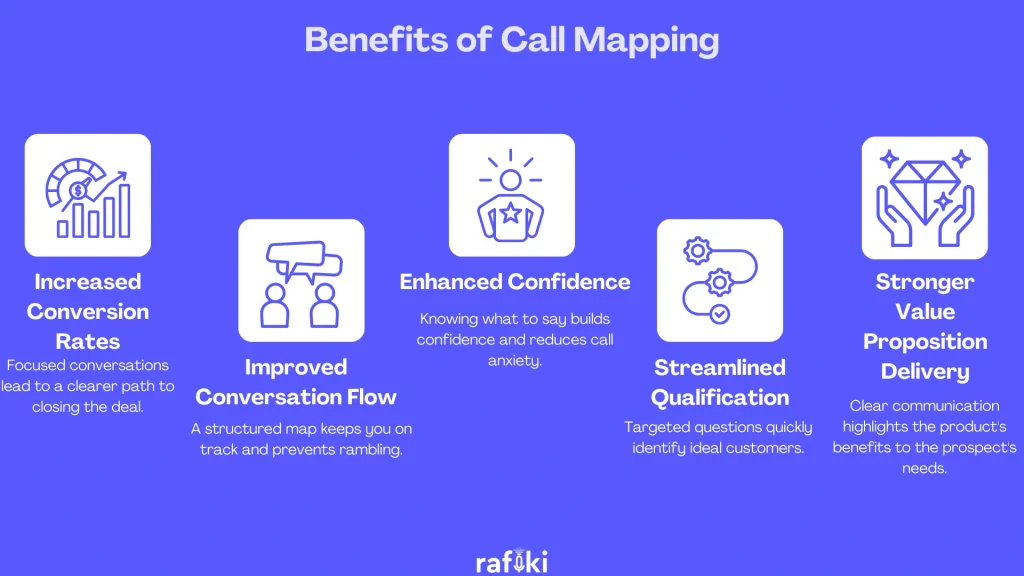
Dodge these pitfalls to ensure your call mapping strategy steers you towards success:
Call mapping doesn't have to be complicated. Here's a proven 5-step process to map out any sales conversation:
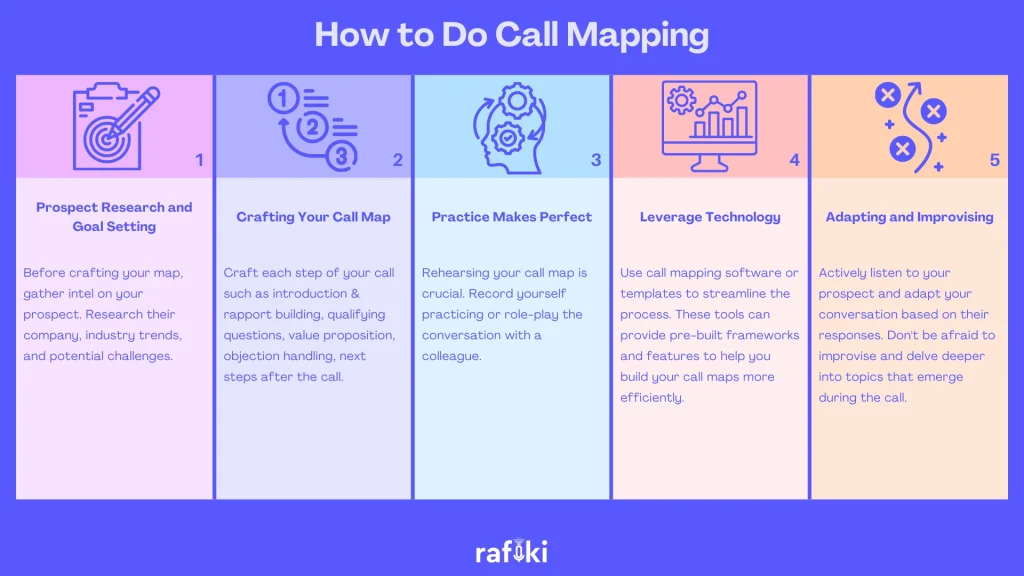
Before crafting your map, gather intel on your prospect. Research their company, industry trends, and potential challenges. This allows you to tailor your conversation and identify talking points that resonate with their specific needs. Once you understand the prospect's landscape, define a clear and measurable objective for your call. Do you want to schedule a demo, gather specific information, or qualify them as a potential lead?
Think of your call map as a blueprint for the conversation. Here's a common structure to follow:
For each section, include talking points, relevant questions, and potential responses you might encounter.
Rehearsing your call map is crucial. Record yourself practicing or role-play the conversation with a colleague. This helps you refine your delivery, identify areas for improvement, and build confidence in your responses. Rafiki AI's AI-powered coaching can analyze practice recordings and highlight specific moments where your delivery, talk-to-listen ratio, or objection handling needs refinement.
Consider using call mapping software or templates to streamline the process. These tools can provide pre-built frameworks and features to help you build your call maps more efficiently. Rafiki AI acts as the intelligence layer between your conversations and your revenue decisions — helping you understand how your calls usually go, map out patterns, and identify exactly where detours happen and require course correction.
Your call map is a guide, not a rigid script. Actively listen to your prospect and adapt your conversation based on their responses. Don't be afraid to improvise and delve deeper into topics that emerge during the call. The best reps treat the map as a safety net — it's there when you need it, invisible when you don't.
A single call map template rarely works for every stage of the buyer's journey. Here's how to adapt your approach:
Rafiki AI's deal intelligence surfaces which topics and questions correlated with closed-won deals at each stage — giving you data-backed call maps instead of guesswork.
Call mapping empowers you to navigate sales conversations with confidence and purpose. By implementing the 5-step framework above — research, structure, practice, leverage technology, and adapt in real time — you'll be equipped to tailor your approach, address prospect needs effectively, and ultimately close more deals. The best part: every mapped call generates data you can use to make the next call even better.
Ready to gain a deeper understanding of your sales conversations and craft winning call maps? Rafiki AI's conversation intelligence platform starts at $19 per seat per month with no minimums and no annual commitment. Start your free trial today or book a demo to see how AI transforms your revenue operations.

Master Sales Conversations
Start for free — no credit card, no seat minimums, no long contracts. Just better sales intelligence.