Multithreading in Sales: How to Engage Multiple Stakeholders
Sreekanth NP
May 3, 2024
8 min read
Multithreading in sales is the strategy of building relationships with multiple stakeholders within a target account rather than relying on a single point of contact. By engaging decision-makers, influencers, and end-users across departments, sales teams reduce deal risk, accelerate consensus, and dramatically increase win rates.
If you've ever watched a promising deal collapse because your one champion changed roles, went on leave, or simply lost internal momentum — you've experienced the exact problem multithreading solves. In complex B2B environments where buying committees routinely include six to ten people, a single-threaded approach is a liability. Let's break down exactly how multithreading works, why it matters, and how to execute it without drowning in complexity.
What is Multithreading in Sales?
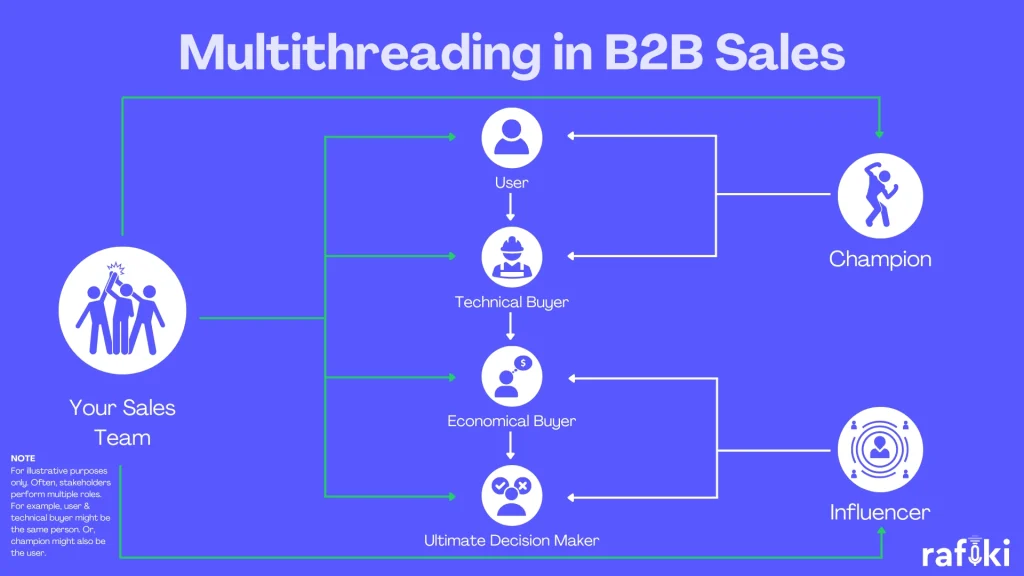
Multithreading in sales is a strategic approach that involves engaging multiple stakeholders within a target company throughout the sales process. It goes beyond the traditional focus on a single point of contact, aiming to build a network of champions who can advocate for your product or service and influence the buying decision.
Imagine a complex B2B sale where multiple individuals contribute to the final decision. By engaging with each relevant stakeholder — understanding their needs, priorities, and concerns — you weave a web of support that strengthens your position and increases your chances of closing the deal.
The data backs this up: 46% of top-performing sellers have relationships with seven or more decision-makers in their top accounts — significantly higher than average-performing sellers (24%) or low-performing sellers (13%).[1]
According to Gartner, the typical B2B buying group now involves six to ten decision-makers, each armed with four or five pieces of independently gathered information.[2] Single-threaded deals simply cannot survive that level of complexity.
Single-Threading vs. Multithreading: Why One Contact Isn't Enough
In a single-threaded deal, your entire pipeline depends on one person's availability, influence, and enthusiasm. That's a fragile foundation. Consider the risks:
Champion departure: Your contact leaves the company, and the deal dies with the relationship.
Limited influence: Your contact supports your solution but lacks the authority or political capital to push it through the buying committee.
Information bottleneck: You only hear one perspective, missing objections brewing in other departments until it's too late.
Stalled momentum: Your contact goes on vacation, gets pulled into another project, or simply deprioritizes — and the deal goes cold.
Multithreading eliminates these single points of failure. When you have three, five, or seven stakeholders invested in your solution's success, no single departure or delay can derail the entire opportunity. Your deal develops resilience.
When is Multithreading the Right Strategy?
Multithreading shines in complex B2B sales environments where multiple stakeholders contribute to the buying decision. It's particularly effective when:
The buying committee is large and geographically dispersed. Imagine a multinational corporation with decision-makers spread across continents. Multithreading allows you to connect with each relevant individual, ensuring everyone's voice is heard.
Different departments within the target company have a stake in the purchase. Your solution might impact various departments like finance, operations, and IT. By engaging with each department head, you address their specific concerns and build broader buy-in.
There's a need to build consensus and overcome potential objections from various parties. Multithreading helps you identify potential roadblocks early on. By understanding each stakeholder's perspective, you can proactively address concerns and build a stronger case for your product or service.
Deal size is significant. The larger the contract value, the more scrutiny it receives internally. High-value deals almost always require executive sign-off from multiple functions — procurement, legal, finance, and the business unit itself.
How to Do Multithreading in Sales: A Practical Guide
Now that we've established the power of multithreading, let's dive into the practical steps involved.
Identify Key Stakeholders: This is the foundation. Research the target company, map out the decision-making process, and pinpoint individuals with influence. Think beyond the initial contact. Look for department heads, budget holders, and potential end-users who will be impacted by your solution. Know the role each stakeholder will play in the process. Some stakeholders might not become part of the process unless you involve them, but some will be part of it whether you want them or not. For example, say you're selling a software solution to the IT department. The account's CFO may not have anything to do with using or purchasing the software, but they might still be a potential obstacle as they have the power to block your deal. You can start by asking your initial contact for additional contacts.
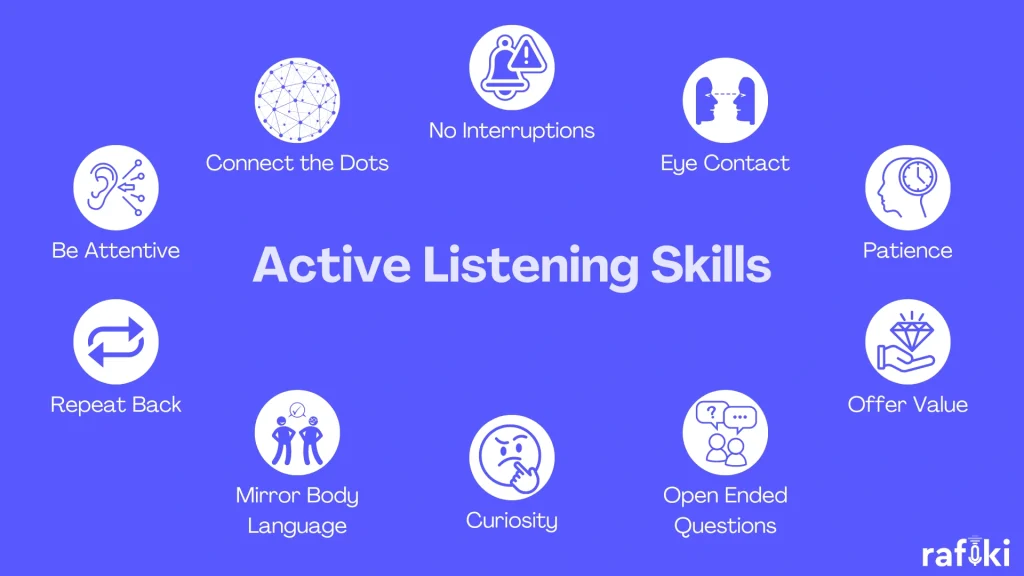
Build Relationships: Don't just connect — build genuine connections. Tailor your communication to each stakeholder's specific needs and concerns. Actively listen, ask insightful questions, and demonstrate a genuine understanding of their challenges. Rafiki AI's conversation intelligence surfaces the topics, objections, and priorities each stakeholder cares about, so you can personalize every interaction.
Leverage Technology: Tools like conversation and revenue intelligence platforms can be game-changers. Rafiki AI's Smart Call Summary automatically captures key points and next steps from your conversations, saving you time and ensuring nothing falls through the cracks. When you're managing five stakeholder threads simultaneously, automated note-taking isn't a luxury — it's a necessity.
Maintain Consistent Engagement: Don't disappear after the initial contact. Schedule regular check-ins, provide updates, and address any concerns that arise. Rafiki AI's Smart Follow Up crafts personalized emails based on your conversations, making follow-up a breeze across every thread.
Track Stakeholder Sentiment Over Time: Multithreading only works if you know where each stakeholder stands. Monitor engagement signals — are they responding to emails, attending demos, raising new objections? Use deal intelligence to spot threads going cold before they become a problem.
Example Imagine selling marketing automation software to a large corporation. You identify the marketing director, the IT manager, and a key salesperson as key stakeholders. At this point, you tailor your message to each: highlighting increased ROI for the marketing director, seamless integration for the IT manager, and improved lead generation for the salesperson. You might also identify someone from a finance team and tailor a message to them about how your solution is much more affordable than competitors. Through consistent communication and addressing individual concerns, you build a network of champions within the organization, significantly increasing your chances of landing the deal.
Benefits of Multithreading: A Sales Game Changer
Multithreading is a powerful strategy that unlocks a multitude of benefits:
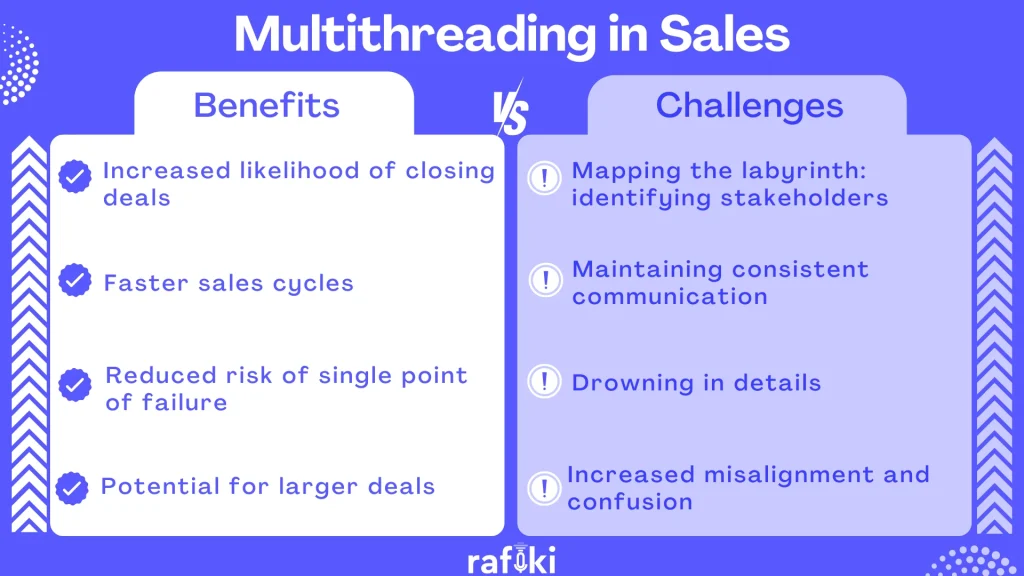
Increased Likelihood of Closing Deals: By building relationships with multiple stakeholders, you gain broader buy-in and overcome potential roadblocks early on. This significantly increases your chances of securing the final decision.
Faster Sales Cycles: When everyone involved is on the same page and actively engaged, the sales process moves forward smoothly. No more waiting for a single point of contact to move things along.
Reduced Risk of Single Point of Failure: Relying solely on one individual creates a vulnerability. If that person leaves or their priorities shift, your deal can stall. Multithreading mitigates this risk by spreading the influence across multiple stakeholders.
Potential for Larger Deals: By addressing the needs of various departments and demonstrating the cross-departmental impact of your solution, you open the door to potentially larger deals with wider-reaching benefits for the target company.
Deeper Account Intelligence: Every stakeholder conversation reveals new information — budget constraints, competitive evaluations, internal politics, timeline pressures. Multithreading gives you a more complete picture of the account, making your proposals sharper and your objection handling more precise.
Common Challenges and Pitfalls of Multithreading
While multithreading offers undeniable advantages, it's not without its hurdles. Here are the most common challenges to be aware of:
Mapping the Labyrinth — Identifying Stakeholders: Navigating the complex web of decision-makers within a large organization can be time-consuming. Researching the company structure, understanding the buying process, and pinpointing individuals with influence is crucial. Tools like LinkedIn can help, but sometimes the best approach is to leverage your initial contact's network and ask for introductions.
Juggling Conversations — Maintaining Consistent Communication: Keeping multiple stakeholders engaged and informed can feel like a juggling act. Technology can be your saving grace here. Tools like Rafiki AI's Smart Follow Up automate follow-up emails based on your conversations, ensuring everyone stays in the loop without you getting bogged down in manual tasks.
Information Overload — Drowning in Details: Bombarding stakeholders with excessive information can backfire. Tailor your communication to each individual's needs and avoid overwhelming them with technical jargon or irrelevant details. Clarity and conciseness are key.
Lost in Translation — Misalignment and Confusion: With multiple conversations happening, the risk of misalignment or confusion increases. Ensure everyone is on the same page by clearly communicating the overall sales strategy and goals. Regular team check-ins can also help identify and address any discrepancies early on.
Stepping on Toes — Internal Politics: Reaching out to multiple people in the same organization can sometimes trigger territorial reactions. Always be transparent about who you're speaking with and why. Frame outreach as thoroughness, not circumvention. When in doubt, ask your primary contact to make introductions rather than going around them.
Here's a quick recap of benefits vs challenges of multithreading:
Multithreading Best Practices: Lessons from High-Performing Teams
Top sales teams treat multithreading as a discipline, not an afterthought. Here are the patterns that separate successful multithreaders from those who struggle:
Start multithreading early. Don't wait until a deal stalls to add stakeholders. Begin mapping and engaging the buying committee from the first discovery call. The earlier you multithread, the harder it is for any single departure to derail your deal.
Assign stakeholder roles explicitly. Use frameworks like MEDDIC or MEDDPICC to categorize each contact — economic buyer, champion, technical evaluator, coach. This prevents you from investing equal time in contacts with unequal influence.
Coordinate across your own team. If your AE, SE, and CSM are all talking to different stakeholders, make sure messaging is aligned. A shared deal room or centralized conversation log (like the one Rafiki AI provides through Smart Call Summary) keeps everyone on the same page.
Create stakeholder-specific value. Generic pitch decks kill multithreading. Build micro-narratives for each persona — the CFO cares about ROI and risk, the end-user cares about ease of use, the IT lead cares about security and integration.
Measure thread health. Track how many stakeholders are actively engaged at each deal stage. If a thread goes dark, re-engage or find a new path. Deals with declining stakeholder engagement are deals at risk.
Conclusion: Multithread Your Way to More Deals
Multithreading in sales is no longer optional for teams selling into complex B2B accounts. With buying committees growing larger and decision processes becoming more distributed, the single-threaded approach is a recipe for stalled pipelines and lost revenue.
The key lies in effectively managing multiple stakeholders, providing value at every touchpoint, and leveraging the right tools to streamline communication and stay organized. Start early, personalize relentlessly, and track every thread.
Rafiki AI's conversation intelligence platform helps sales teams multithread effectively — automatically capturing insights from every stakeholder conversation, surfacing deal risks, and generating personalized follow-ups. Plans start at $19 per seat per month with no minimums. Start your free trial today or book a demo to see how it transforms your multithreading strategy.